Music and More

Conflicting Changes - Part 2

Part 1 

I start my cultural acrobatics functioning through the masculine perspective and from recognizing the patriarchal bias in my New Mexican region.  I preface this because I feel much of my orientation can only represent a view from this side of the gender border.  My conflicting changes have to begin with my gender.  I am not indulging the gender conflict currently enflamed in today's pop culture, I am writing through the male lens, a masculine privilege, and competitive instincts.  I have chosen to be a gentle warrior upholding values for ancestors who I feel had to drift from communal.  This identity has evolved from desiring to be a champion, dominant, and prestigious.  The deep dive into my cultural paradoxes have resulted in a condition that has at times been numbing.  I am human, diagnosed as Chicano.  Yes, diagnosed, better yet self-diagnosed.

My mother is my most influential teacher of focus, birthing me while only a maturing child herself, at 17. She was guiding herself and me into choices both blessed and ominous, yet mostly seeming to turn fortuitous.  My step-father is another.  My father in his brief opportunities to be with me, made a strong impact.  I had uncles and aunts that steered me and at times squished me.  These are my first attempts at loving relationships. I see these relationships are the bedrock for who I am and how I am.
I am about to describe how my darker shades of brown were made.  


This is not an attempt to disenfranchise myself or burn the bridges to my past.  This will be an encounter with my soils.  It will be a critical look into what building blocks and nutrients surrounded me and still feed my existence.  It will be the curious step into machismo, addictions, violence, criminality, and victimization.  It will be the first step towards taking responsibility for being bonded with the idea of being more human and less obligated to be lower case chicano.  It is a way for me to embrace the victimization in me by taking responsibility for not looking for the wellness that transcends labels and identities.

Conflicting Changes - Part 1


Part 1

Love is measurable, like counting the atoms that make up our universe.  We have an obligation to keep counting.  We paint ideas of being loved in romance, our passions, and heartfelt expressions.  That might only be half of its existence.  We are deeply capable of resisting care, and the potential feelings of emotional susceptibility. Maybe saying that practicing love has formidable obstacles.  Love has proportionate hurtful ways of being avoided, tactics for not being vulnerable.  I spent hours with people seeking care for behavioral, lifestyle, and relationship healing.  They were looking for answers, as if they didn't have the answers intrinsically or even as if there was an answer.  I find counseling, when done well, is addressing the ways we are not lovable.  And it might be important to say that mental health has disease and dysfunction that can't be reasoned with using this understanding.  I am talking about characteristics found in the heart of the human struggle bell curve.  I recognize, in a person’s creative demonstrations of independence, a pattern of resisting or avoiding love.  The cliché term is pushing someone away.

I am guilty of the action and prefer to think of it safeguarded sabotage.  I might blow up relationships, more like stress the durability, and likely exercise my reactivity with protagonism in order to reveal the depth of love that truly exists within them.  And for clarity relationships in this context are not limited to the romantic flavor.  I can’t say that it is test.  I can’t say there is any type of thoughtfulness in it.  I think it is a modality for emotional protection, and when reckless just a coping strategy.  I do this because so many relationships in my life have softly pinched me, bitten me, and socked me.  I am sure I have done the same.  
Because my safety is found in solace, I think the push is to restore some form of stability to organize my emotions.  I retreat.  My comfortable distance with gregariousness is kept by the angst from not knowing when my protagonism is not seen as agonism.  As I become intimate I am lured into vulnerability and this is where my first defense has been to sabotage for safety, like a tunnel rat might scan booby traps.  I blow that shit up.  Sometimes it is intentional, more often it just feels like I got entangled.

Experiencing this resistance to the vulnerability and safeguard from deep connection might be our love limit.  I want to explore this vulnerability as a spectrum for progress.  I find popular enjoyment in using the term push-pull.  And isn't this nature or expected.  Life is polarities dancing, generating a chaos that tends to result in creativity, consumption, or contribution.  It isn't dysfunctional and even better recognized as a natural way of being in or struggling for balance.  I have practiced curiosity when I grow aware of these tensions, and this has been a helpful tool for adding focus to the push-pull. This helps me to formulate messages to create healing "space" in and through the back and forth.  Space here is defined as a platform for confronting the barriers to a harmonious self concept or inertia to disconcerting for togetherness. 

In this next little series I hope to describe my struggle to hold the Chicano identity, while framing my struggle in the above described psychology of safeguarded sabotage.  I am going to describe the dysfunction I experienced growing to be American while being seen as something embedded.  I'll share my reflections on the symptoms of ignorance and neglect that come from the people, the humans, that label themselves Loving.

Pardoning the Ex-tradition of a Legacy

 I come from Latin privilege and Chicano scarcity.  My maternal grandparents are a large influence on who I became in life.  They didn't seem to struggle with identity openly.  They did label though.  And for whatever social influences or lack of need they rarely promoted any label themselves.  They established the bedrock for what I rely on as a character compass.  They created what I know as my family.  They were raised in a generation that inspired the need for a Chicano mentality.

My grandparents were taught under a regime of Catholic dictators enforcing laws that disabled a lot of their reckless creativity.  I paint with a bias that overlooks the love and tradition the same Catholic ordained paradoxically brought with them.  This Christian archdiocese, including the radical authorities, enforced a catholic tradition of shame and guilt right along side a message of stewardship and compassion.  The penitent façade of Catholic Christianity seemed to bind my grandparents into obedient stewards to humility, handicapping them, while protestant Anglos capitalized on their, reformed alignment with prosperity and wealth.  I don't need to be Protestant I need to radicalize my Catholicism.

My religious attitude paints with broad strokes.  I am inflamed by my commitment to the Catholic rules that don't seem to stifle the liberated "Christian".  Blessed are the meek, while my ego looks up at the Christians who seem to be lavished by the sleek.  I am dull by the sadness from the discouraged attitude the Catholic church has towards the spiritually creative and grip on dogma.  I am jealous of the prosperity that comes from Anglo-American Evangelical modalities.  I want the same freedom to interpret and create revolutionary mentalities around the gospel that aren't commercialized.  I want to dismantle the  faith that rooted my grandparents in hesitancy, fear, and obedience.  My grandparents died obedient Catholics and I want to die a believer in Christ.  I don't know how different these deaths are, and pray they lead to the same heaven.

Gettin it right

Part II
 "I'm not a smart man", my grandpa tells me, slopping up fresh pinto beans and green chili with a torn off piece of tortilla.  The tortilla creates a pocket when he slightly folds the tortilla piece while pinching the ends together.  This make shift spoon helps shovels spoonfuls of frijoles while at times becoming a bite of it's own.  "Don't be like me", he continues between bites.  He rakes the plate with each tortilla piece leaving small gravy tracks, whittling his pool of beans and chili into a shrinking portion.  "I wanted to go to school".  He describes how he isn't sure why he couldn't focus.  He hasn't shared what were his barriers but his rhetoric paints a story of an early exit, an easy exit.  

This baffles me because he is such a craftsman.  The education that he did excel in was not in a classroom.  It isn't listed on a transcript in a data warehouse that I can admire.  He doesn't have certifications hung on his walls, highlighting any curriculum that vetted his knowledge against other men.  And I don't know my grandpa as anything other than capable.  This is different than smart.

Grandpa, I want to be like you, and if not being smart is part of that then I will find a way to just be capable.  I want to learn how to come from my day of work and build.  I likely won't build cabinets from scratch but I will create.  It may be a poem, a story, or a reflection.  I hope I can be a learner like you.

Grandpa you didn't get it right, rather you got it well!  I hope you can feel on your new cosmic journey that there was never a smart way and you surely didn't have to avoid the wrong way so strongly.  I hope you see in the heavens that how you lived was valuable and worthy of praise.  The love so many have for you, should help you see that the lessons you mastered are accredited by the ethos.

At times it appeared hard to tell that you cared, were pleased, approved, or were impressed.  I needed more smiles that came naturally, and didn't have to wait for libations. I hope to learn to be sweet without the reliance of beer or two.  I hope to soften my feedback, because it hurt to hear your doubt come through in your praise.  And I remember how much it hurt hearing you doubt yourself, so I hope I can find a way to build confidence with the modesty I admired from you.  

How come you describe yourself as falling short?  I miss you, sitting down under a roof you built, reaching for a salt shaker from a cabinet you fashioned, pouring frijoles into a bowl grandma crafted, scooping chili from pan older than me resourcefully maintained.  You are quality.  Who taught you to hold yourself down?

Part I

Donde Frijole

 Part I

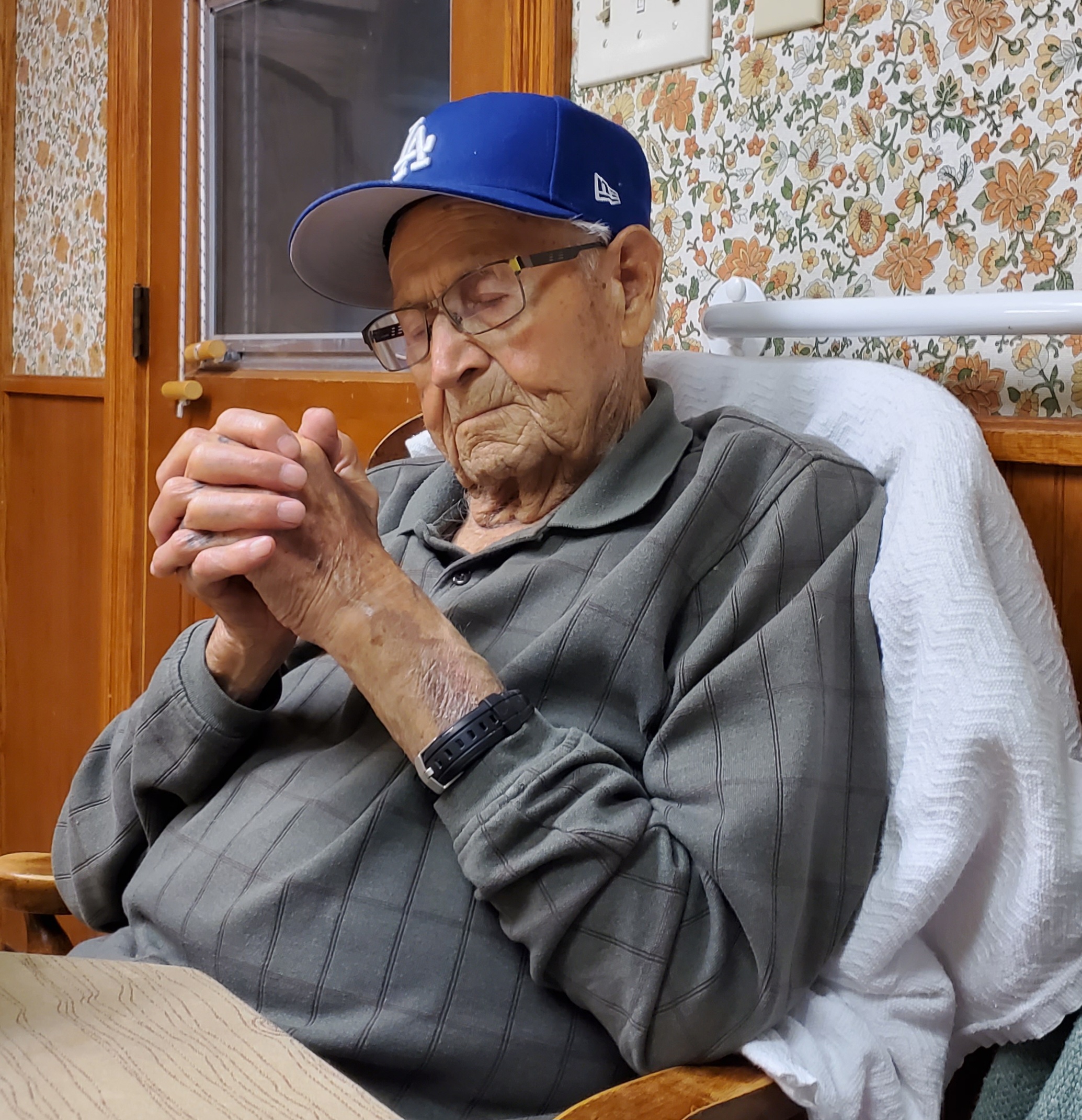
A polished soul.   I cherish how my grandpa aged.  Describing who he became, can only come with the fortune of knowing who he had been, accompanied by the nostalgia of how he saw himself through his many shared memories.    Remembering is somber, and it feels important to push through painful emotions with urgency because of a fear that the vividness of his memory will fade.  A part of me dies with him now gone. A part of me fights to keep him alive.  I feel the burden of carrying some tradition baring down on me, despite nothing really changing for me.  Getting to know my grandpa's love came with knowing of the painful lessons teaching me to let him go.  The love built up for him and from him was layered with every shared responsibility.  My grandpa worked.  If I wanted to spend time with him it was going to be more often working.  This is how I'll start.


Ricardo woke up  early for as long as I can remember.   His profession required that he was out the door early, far before I was awake.  And his bed covers were pulled up, no sign of him leaving anything messy.  I felt this was an important aspect of what manhood meant.   My grandpa began and ended his day with prayer. Kneeling in his tighty whities, his cotton briefs and white ribbed tank, he prayed in front of his night stand, head bowed. This is as vulnerable as I'd ever remember him.

I rarely saw him leave. As he drove by his childhood home in his truck, column shift changing gears, growling engine slowly warming up, I wonder what thoughts scrolled through his head.  My grandpa's truck was an iconic black 69' Chevy, decorated with wood patterned side trim, and a custom lumber rack. He drove by his mother's house on his commute out into the city and on his return. I have to believe this would make him smile. 

He left his body, lying on an emergency room's bed. His shirt was cut open, his chest red with signs of freshly reddened bruising from the fight his life, the damage left from intense chest compressions. His pants also unbuckled, and stomach bloated, visibily out of sorts, abnormally round. He appeared unconscious with a tube lodged in his mouth. This would be the worst and last I'd ever see him. This commute everything was left messy,  unlike I'd known him to be, and only because this goodbye was out of his control. I buckled up his pants.  I pulled up his sheets.  I put my left hand on his, the other on the crown of his head, and kissed his warm forehead.  I bowed my head and prayed. His work was done.

Richa was called home, November 9 th, freed from his body on a beautiful blue sky day. He was surrounded by loved ones and highly likely greeted in the cosmos by loved ones. And like his black work boots were polished and shiny,  his soul, in my eyes, was polished too. 

Aging justice

    The ego is a shadow that doesn't have to worry about the social stigma that comes with having white hairs.  Maybe a silhouette of what we think we need to be without the tired eyes.  I walk around looking through eyes that aren't aware of how I appear to others.  I walk around less tuned into what my ego is telling me.  I am curious about this found peace of mind, confidence, or obliviousness.  The idea that I am growing old, invites me to look at what ego means in this stage of my life.  

How does the ego participate in a vulnerable man's heart?  I hope it might be just a piece of me that gets comforted, a restlessness in my head less stirred by all the things I am disappointed by, but definitely the healing of bullied part of my psyche.  A self bullying.  The humility of a greying beard matching a blurring eyesight, feeding a denial lurking around highlighting all of my limits, tiring my sense of self.  Aging is a small reminder of this itchy friend.  The ego, the construct, the psychological scapegoat, steering my selfishness no longer seems ageless.  I might be a little sad about not needing my ego as much as my ego thought it was helping me.  I might even acknowledge or celebrate how it steered me in a direction that allows me to see it as a friend.

    As a young boy, my look in the mirror was a dazzling narcissism with a biting criticism.  As an adolescent the look in the mirror was an exercise in conforming with a confused sense belonging so that I might be satisfying to my elders and leaders.  I might now be an elder.  What also grew in my adolescence was a hope to be desired.  Desired, slightly different from satisfying, I realized that I wanted to stand out in order to be seen, especially by girls, possibly authorities.  My ego is how I describe the boy in the mirror.  Those moments when I look in the mirror and strategize as if there was something I could tweak to be perceived in a profound way.  The ego has been a tool for shaping a self image, cultivating a vanity.  I feel as if I needed to see my reflection to fix the flaws, hoping the adjustments would lead to profits of affection.  

I think my ego, mad at my body for so long, has now tired from the acceptance that humility has afforded me.  I see how time is replacing the angst that my ego once tickled.  The idea of being on the second half of a life's journey removes the need for an ego and emphasizes the hope for legacy.  A legacy seems far different from what the ego steered to. And yet it might have been the recklessness I needed to propel me into adventures that molded me.  My ego is digging through my dreams, hoping to find a place to relocate.  The true self doesn't have to look in the mirror often, a
nd my ego gets a jolt when I do.  A sadness and a madness because this is how glamour dies.     
     

False summitting is still summitting

 I am sitting on the cement foundation of a ski lift at the top of a false summit in the Santa Fe National Forest.  At the top of the Santa Fe ski basin's Quad chairlift.  Following the tree-line of a beginner run, I have just skinned up my first trek.  It is cold and daybreak, the grey blue filter that slowly unveils the rolling foothills .  This is my first summit on skis.  Skinning is new to me, the act of hiking up hill on skis sleeved with a cloth bottom to eliminate the slick surface.  I had envisioned myself in this adventure called skinning so many times while snow shoeing.  As my interest in being in the wilderness has evolved, so has my interest in accessing the wilderness in any season and in most conditions.  This new skill allows me to get around quicker and with less effort.  Sitting catching my breathe and oddly trying to cool down despite it being in the single digits, I find it still takes plenty of effort.  I am alone on a summit knowing the highest point is still another 45 minutes up.  I am stopping at a false summit.  Something my ego is itching with, ready to reject, and can't hold the idea of not continuing on up. 

    A false summit is the dreaded point on a mountain climb when you feel tired enough to desire that the destination has to be at the top of the upcoming peak, because your legs are telling you it should be.  The lack of anything behind the silhouette of the current horizon gives you that sense of relief that the work is nearly over.  Then as the distance closes, you find as you reach this point there is still so much more mountain to climb.  The false summit today reminds me of the importance of celebrating the journey just as much as I appreciate a true summit.  

    So I like skinning.  Skinning is another way to get into the wild when the weather conditions are truly wild.  I am absorbing that the perspectives I apply in my life are equally a moment in a journey.  Not everything is gonna a climb.  Today it is a false summit, turned destination, and tomorrow it may be a long fall down.  Having the skills to tussle with the paradox while feeling perplexing emotions is the journey.  Being both and is the humanity.  The the memory is the judgment.  And how I choose to implement the experience as a perception, is a skill.  So I continue on my journey.
  

Chicano More than a Label - Part 3

Part 2 What impact do the labels people of Spanish lineage chose, have on the delivery of mestizo values. Labels in the form of identities c...